

Give the transcript a fair starting point
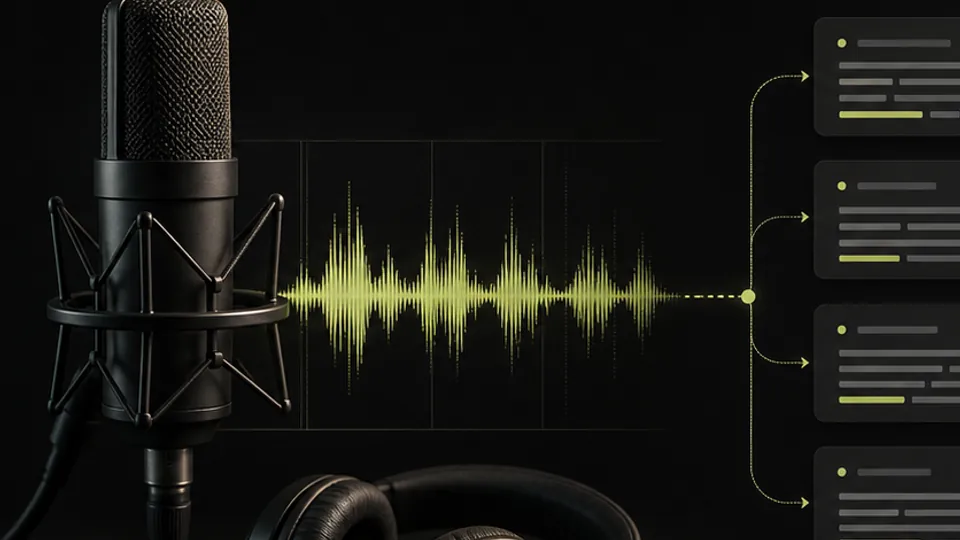
Use the cleanest version of the episode, preferably before loudness processing has exaggerated room noise. Speech should be easy to hear without boosting the volume. Overlapping guests, remote-call artifacts, and music under dialogue can reduce transcription accuracy.
Before uploading a long episode, confirm that the file starts and ends where you expect. A stray pre-roll conversation or several minutes of silence adds noise to the notes and can shift timestamps.
Tell the workflow what the notes are for
The same episode can support several useful summaries. A technical audience may want definitions and links. A leadership audience may care about decisions and action items. A narrative interview may be easiest to browse as a timeline.
Choose one focus for the first pass. “Key takeaways and action items” is more useful than “everything important” because it gives the research and final structure a clear filter. You can run another version if you need a separate resource list or technical appendix.
Review the transcript before trusting the research
Research begins from the words in the transcript. A misspelled surname can lead to the wrong person; a misheard product name can lead to an unrelated company. Search the transcript for names, titles, dates, numbers, and specialist terms before using the linked references.
Open the sources behind factual additions. Confirm that each source supports the note beside it and that the page is current enough for the claim. If the episode contains an opinion, keep it attributed to the speaker instead of turning it into a general fact.
Write for someone who has not listened yet
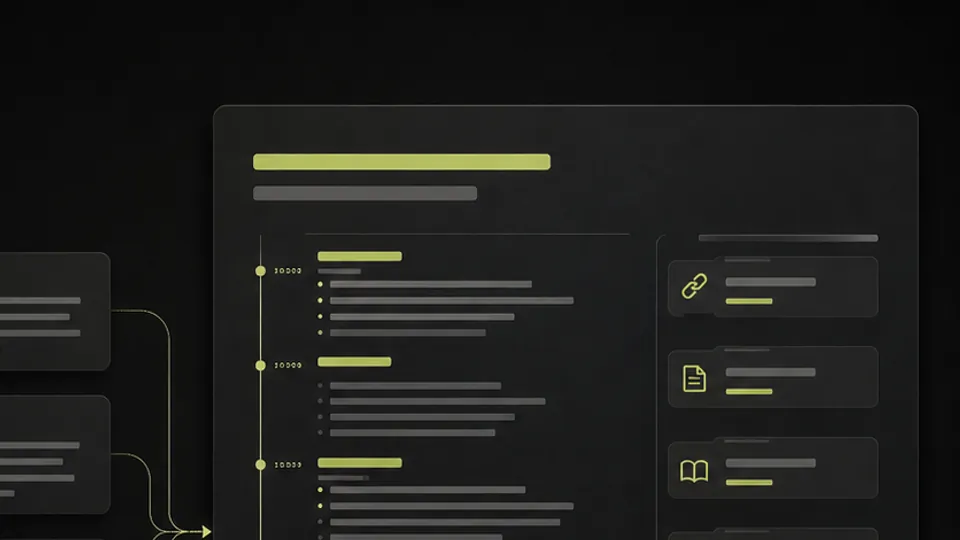
Good show notes are a map, not a second transcript. Begin with a short description of the episode and the reason to listen. Use chapter-style sections for the main turns in the conversation, then place links and references near the idea they support.
Keep timestamps easy to scan and check several against the actual audio. Player introductions, ads, or edits can shift the timing. The visual topic map should clarify the relationship between ideas, not repeat every heading in a more decorative form.
For shorter video material, the highlights guide explains how to find moments worth clipping. For a standalone source review, see the research report guide.
Before you publish
- Names and specialist terms match the recording.
- Important timestamps open at the right moment.
- Links point to the intended people, companies, and sources.
- Quotes remain faithful to the transcript.
- Opinions are attributed to the speaker.
- The topic map adds structure instead of duplicating the notes.