


Turn the topic into a question you can answer
“Research renewable energy” leaves too many choices open. “Which grid-scale storage technologies entered commercial use in Europe from 2023 to 2026, and what limits adoption?” defines a period, geography, scope, and decision. The report can now exclude background that does not help answer it.
Write down the output you need as well. A briefing for a meeting should lead with conclusions and open questions. A learning report can spend more time on definitions and history. A decision memo should make the evidence behind each option easy to inspect.
Use different sources for different jobs
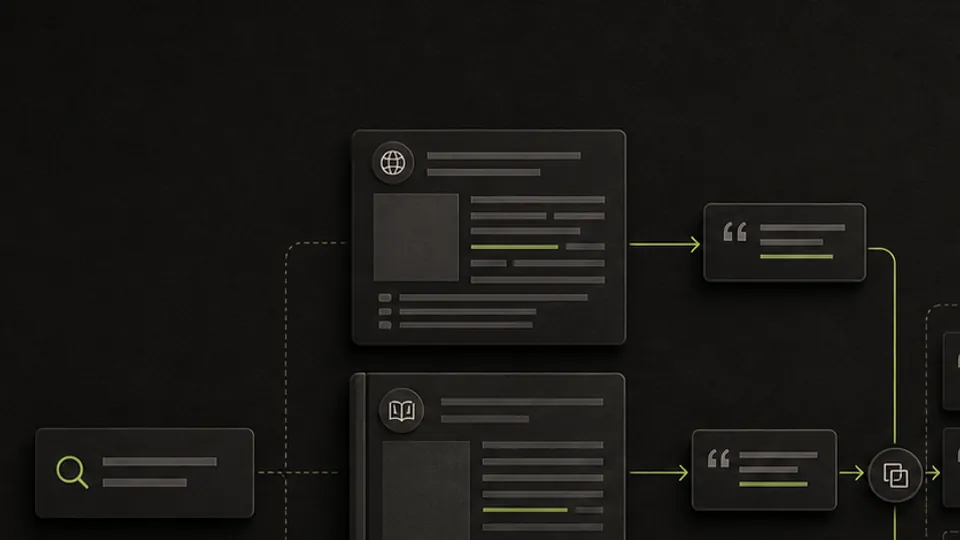
Current web results are useful for recent events, product changes, policy, and new research. Reference material is useful for definitions, established history, and terminology. Direct page review is where you confirm the details that search summaries leave out.
Prefer sources close to the fact: official documentation for a product limit, a regulator for a rule, the paper for a research result, or a company’s filing for its own reported numbers. Independent reporting can add context and challenge a source’s framing. The report is stronger when those roles are clear.
Keep claims attached to evidence
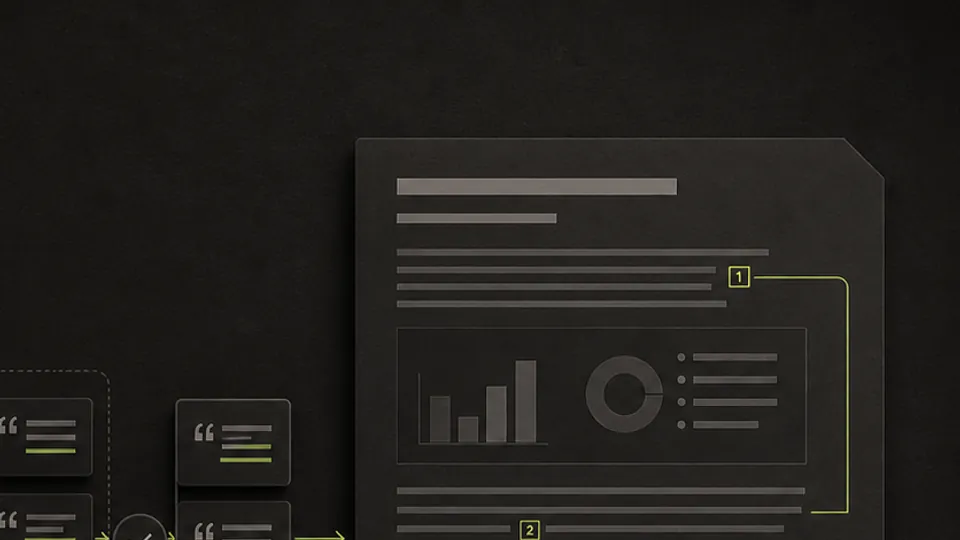
While reading, separate direct facts, source interpretations, and your own conclusion. Dates and numbers should point to the page that contains them. A source about one country or customer segment should not silently become a global claim.
Search snippets are leads, not evidence. Open the page, check the publication date, and read enough context to understand the measurement. If a useful page is inaccessible or a claim appears only in secondary summaries, say so instead of filling the gap with certainty.
Preserve disagreement and uncertainty
Two sources may use different samples, time windows, or definitions. A neat average can hide that difference. Explain why the numbers diverge and which one fits the question. If neither does, leave the issue unresolved and name the evidence that would settle it.
The final report should make the main answer easy to find, but it should also show its limits. A short “What remains uncertain” section is often more useful than another page of background.
For a structured comparison of named products, use the competitor analysis guide. If the research will support a presentation, continue with the pitch deck guide.
Before you use the report
- The question includes a clear scope and time period.
- Important claims link to pages that support them.
- Publication dates and event dates are not confused.
- Search snippets have been checked against full pages.
- Conflicting sources remain visible.
- Conclusions do not claim more than the evidence shows.