
Write a scene that fits in one frame
The Fableton workflow begins with a written scene description. It creates the still image first, then uses that image as the source for a video. The first frame therefore sets the subject, camera angle, light, and space around the movement.
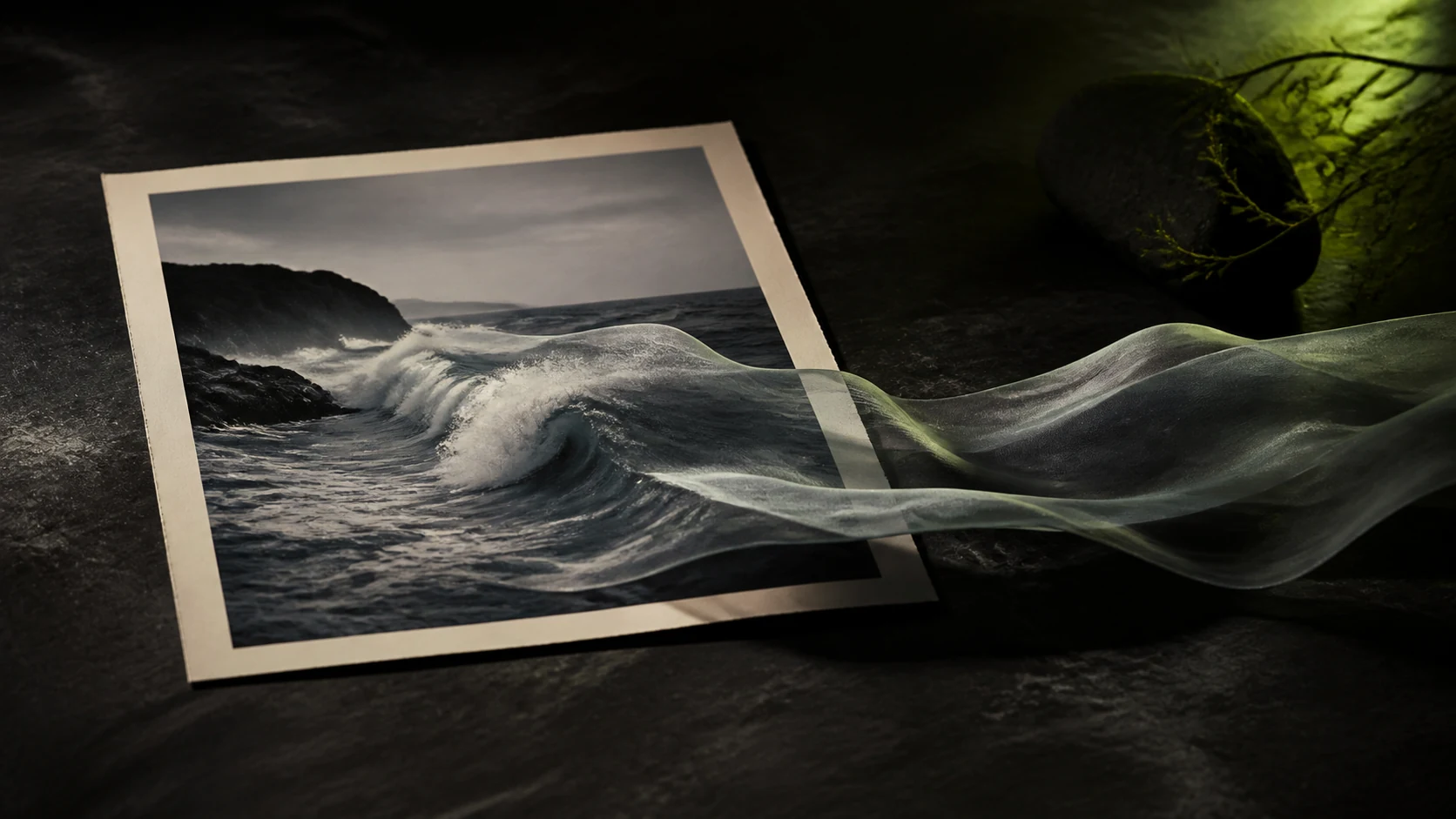
Describe something a photographer could capture in one shot. “Ocean waves hitting dark rocks at sunset, wide view from shore” gives the frame a subject, setting, light, and camera position. A paragraph with several locations and camera changes does not.
Approve the still before adding motion
Open the generated image and inspect the parts that must stay stable. Check faces, hands, buildings, product outlines, horizon lines, readable text, and repeated objects. Also check whether the frame leaves enough room for a crop, caption, or interface overlay if the video will be used in a layout.
Regenerate the image when the composition is wrong. Animation adds movement to the frame, but it does not reliably repair a misshapen object or confusing scene.
Give the clip one main movement
After you approve the frame, it moves into the video step. A simple motion gives that step a clear job. Waves can roll toward the rocks. Snow can fall past a cabin. Clouds can cross the sky. The camera can move slowly toward a product.
Keep the subject stable unless its movement is the point of the clip. Several simultaneous actions make it harder to preserve the original shapes and lighting.
Review shape, light, and speed separately
On the first replay, ignore the story and watch the edges. Buildings, limbs, product shapes, and the horizon should not bend or change between frames.
On the second replay, watch the lighting. Look for flicker, unexpected color shifts, or shadows that move without a cause. Then check speed. A sudden camera move can make a clean frame feel accidental.
For a portrait that needs to speak, use the talking avatar guide. If you are working from a longer recording, see how to extract video highlights.
The clip is ready when
- The subject stays recognizable from the first frame to the last.
- One movement guides the viewer’s attention.
- Edges, lighting, and background objects remain stable.
- The opening and ending can be trimmed without an abrupt jump.
- The frame still works in its intended crop or layout.